Beschreibung
An RFID Key Chain, often referred to as an RFID Key Fob or RFID Key Tag, is a small, portable device that incorporates Radio-Frequency Identification (RFID) technology to enable convenient and secure access control, identification, and other contactless interactions. It effectively replaces traditional keys or cards for various applications.
How it Works:
At its core, an RFID key chain contains two main components:
- Microchip (Integrated Circuit): This tiny chip stores a unique identification code, and in some cases, additional data.
- Antenna: A small coiled wire or etched circuit that enables the chip to communicate wirelessly with an RFID reader.

When the RFID key chain is brought within the electromagnetic field generated by a compatible RFID reader (often simply called an RFID reader or access control reader):
- Passive Fobs: Most common key chains are passive, meaning they do not have their own power source. They draw energy from the reader’s radio signal.
- Data Transmission: Once powered, the chip transmits its unique ID code (and any other stored data) back to the reader via radio waves.
- Verification: The reader receives this data and typically sends it to a backend system (like a door controller or a computer database). The system verifies the ID against a list of authorized credentials.
- Action: If the ID is recognized and authorized, the system performs a predefined action, such as unlocking a door, logging an event, or initiating a transaction.
Key Features and Types:
RFID key chains are available in a variety of materials, designs, and operating frequencies to suit different needs and environments:
Materials:
- ABS Plastic: The most common and cost-effective material. Durable, lightweight, and comes in various colors and shapes.
- Epoxy Resin: Encased in clear, durable epoxy, making them highly resistant to water, chemicals, and physical impact. Often feature attractive custom designs.
- PVC: Similar to plastic cards, PVC key fobs can be customized with printing.
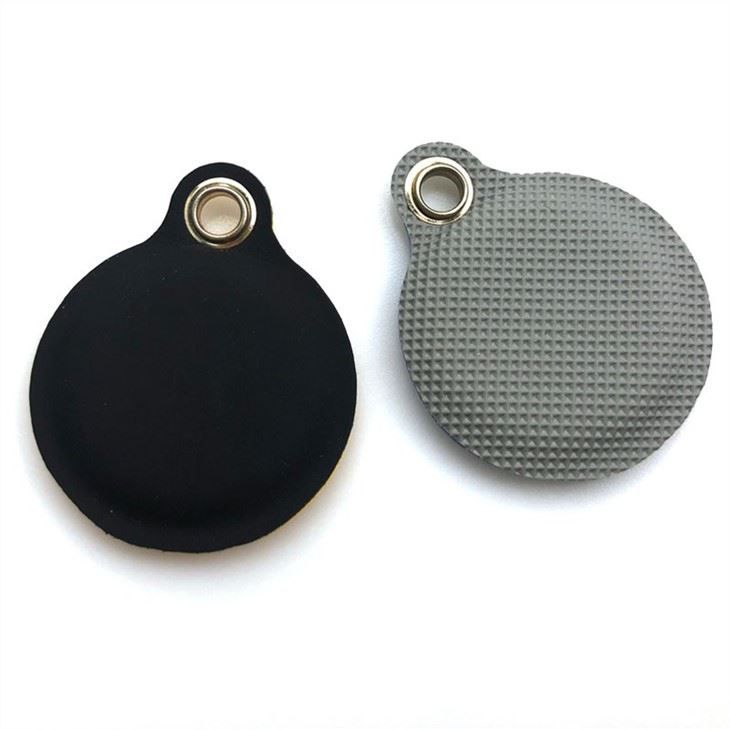
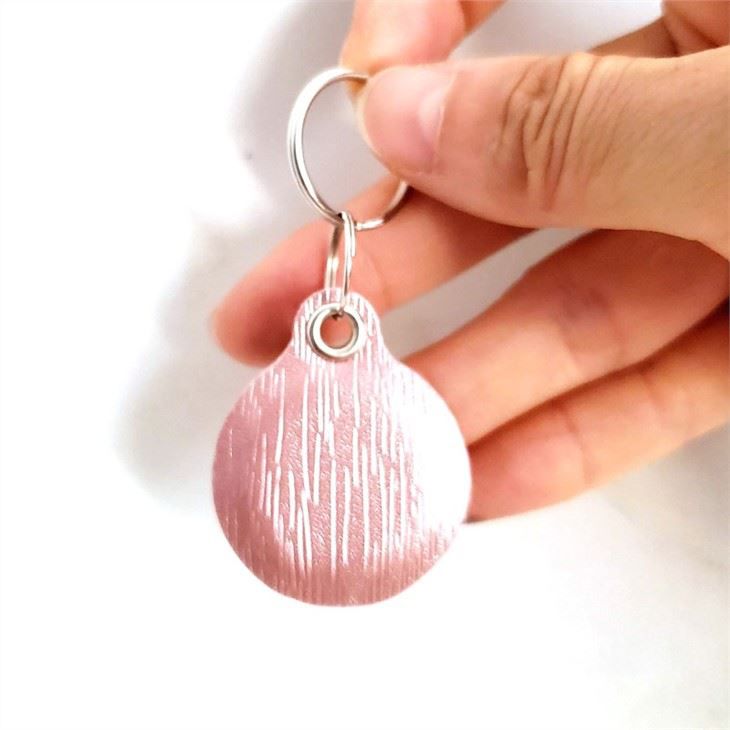
- PU Leather (Faux Leather): Offers a premium, stylish look and a comfortable feel, often used in corporate or hospitality settings.
- Wood: An eco-friendly option with a natural, unique aesthetic.
- Metal: Extremely durable and robust, often used for heavy-duty applications.
- Silicone: Flexible, soft, and waterproof, ideal for environments like gyms or swimming pools.
Frequencies:
- Low Frequency (LF) 125kHz:
- Read Range: Short (typically 0-10 cm).
- Characteristics: Less susceptible to interference from metal or liquids.
- Common Use: Basic access control (e.g., apartment building entry, gym membership), animal identification (though not usually in key fob form for pets).
- High Frequency (HF) 13.56MHz:
- Read Range: Moderate (10 cm to 1 meter).
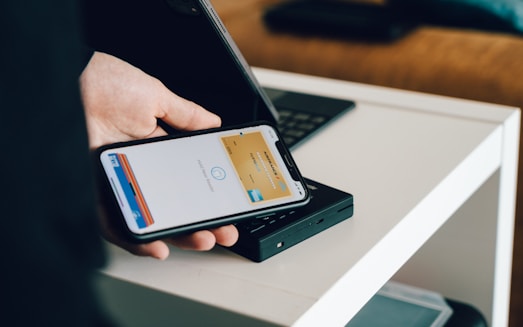
- Characteristics: Compatible with Near Field Communication (NFC) technology, allowing interaction with smartphones. Can support more data storage and encryption.
- Common Use: Secure access control, cashless payments (e.g., in cafeterias or events), loyalty programs, public transport ticketing.
- Ultra-High Frequency (UHF) 860-960MHz:
- Read Range: Longest (up to several meters).
- Characteristics: Faster data transfer rates, often used for reading multiple tags simultaneously. More susceptible to environmental interference.
- Common Use: Vehicle access control, logistics, inventory management (less common for typical personal key fobs but used in specialized applications).
Other Features:
- Unique ID: Every RFID key chain has a unique identifier, ensuring individual recognition.
- Read-Only vs. Read/Write: Some fobs are read-only (their ID cannot be changed), while others are read/write (data can be updated on the chip).
- Customization: Can be customized with logos, serial numbers, colors, and unique shapes.
- Durability: Designed to withstand daily wear and tear, often featuring waterproof and shock-resistant properties.
- Attachment: Typically includes a sturdy metal keyring or a loop for attachment to keys, lanyards, or bags.
Common Applications:
RFID key chains are widely used in numerous sectors due to their convenience, durability, and security features:
- Access Control: The most common application, for entry to buildings, offices, residential complexes, gates, gyms, and hotel rooms.
- Time and Attendance: Simplifying employee clock-in/out processes.
- Membership Management: Identifying members for clubs, loyalty programs, or recreational facilities.
- Cashless Payments: In closed-loop environments like corporate campuses, amusement parks, or event venues.
- Vehicle Access Control: For authorized entry to parking garages or vehicle starting systems.
- Personal Identification: In various scenarios requiring quick, non-visual ID.
- Asset Tracking: Attaching to tools or equipment for simplified inventory and management.
Overall, RFID key chains offer a streamlined and efficient way to manage access and identification, moving beyond traditional keys and cards to provide a compact, robust, and technologically advanced solution.
| Product name | RFID Key Chain |
| Size | 40*32mm |
| Chip | NTAG213 |
| Frequency | 13.56Mhz |
| Protocol | ISO14443A |
| Working life | 100,000 times |
| Working temperature | -20℃~70℃ |
| Weight | 3g |
| Readding distance | 2~5cm |
| Memory | 888 bytes |