Beschreibung
RFID (Radio-Frequency Identification) key fobs are versatile devices used for various access control and identification purposes. They are broadly categorized based on their operating frequency, the type of chip they contain, and the materials they are made from.
I. By Operating Frequency:
The operating frequency is a crucial characteristic as it dictates the read range, data transfer speed, and suitability for different environments.
-
Low Frequency (LF) RFID Key Fobs (125 kHz – 134.2 kHz):
- Characteristics: Short read range (typically 0-10 cm), less susceptible to interference from metal or liquids. Generally „read-only,“ meaning the unique ID is fixed.
- Common Chips: EM4100, TK4100, T5577 (rewritable for copying other LF fobs), Hitag series.
- Applications:
- Basic access control (e.g., apartment buildings, gyms, employee entry).
- Time and attendance systems.
- Simple identification.
-
High Frequency (HF) RFID Key Fobs (13.56 MHz):
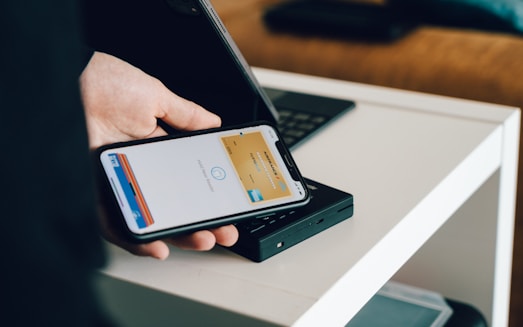
- Characteristics: Moderate read range (typically 10 cm to 1 meter), compatible with NFC (Near Field Communication) technology, allowing interaction with smartphones and secure data transactions. Can support more memory and encryption.
- Common Chips: MIFARE Classic (1K, 4K), MIFARE Ultralight, MIFARE DESFire, NTAG series (NTAG213, NTAG215, NTAG216), Fudan.
- Applications:
- Secure access control (e.g., corporate offices, secure facilities).
- Cashless payment systems (e.g., cafeterias, events, public transport).
- Loyalty and membership programs.
- Ticketing (e.g., event passes).
- Data exchange with NFC-enabled devices.
-
Ultra-High Frequency (UHF) RFID Key Fobs (860-960 MHz):
- Characteristics: Longest read range (up to several meters, or even 15+ meters with specialized readers), faster data transfer rates, often capable of reading multiple tags simultaneously („bulk reading“). More sensitive to interference from liquids and metals compared to LF/HF.
- Common Chips: Alien Higgs series, Impinj Monza series, NXP UCODE series.
- Applications:
- Vehicle access control (e.g., parking garages, toll collection).
- Long-range asset tracking.
- Logistics and supply chain management (though less common for personal key fobs, more for vehicle or large equipment identification).
II. By Power Source/Operation Mode:
-
Passive RFID Key Fobs:
- Characteristics: Do not have an internal battery. They draw power from the electromagnetic field emitted by the RFID reader. This makes them small, lightweight, and very durable with virtually unlimited lifespan (as long as the chip/antenna are intact).
- Dominance: The vast majority of RFID key fobs fall into this category.
- Applications: All the applications listed above for LF, HF, and most UHF fobs.
-
Active RFID Key Fobs:
- Characteristics: Contain their own battery and can actively broadcast a signal. This results in significantly longer read ranges (tens to hundreds of meters) and the ability to transmit more data. They are typically larger and more expensive due to the battery.
- Applications:
- Real-time location systems (RTLS) for tracking people or high-value assets.
- Long-range personnel tracking (e.g., on large industrial sites).
- Automated gate access where drivers don’t need to stop.
III. By Material and Form Factor:
The material affects the key fob’s durability, aesthetics, and sometimes its environmental resistance.
-
ABS Plastic Key Fobs:
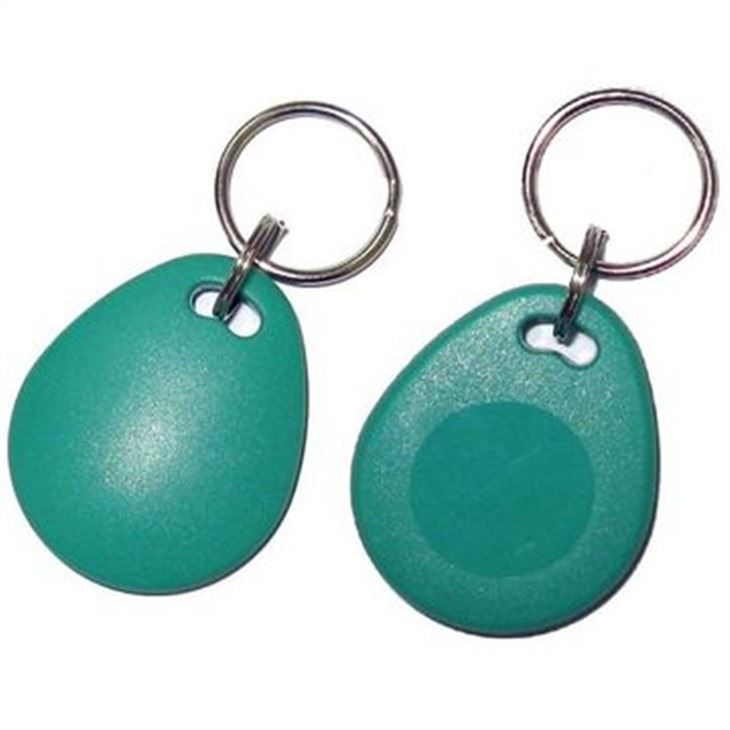
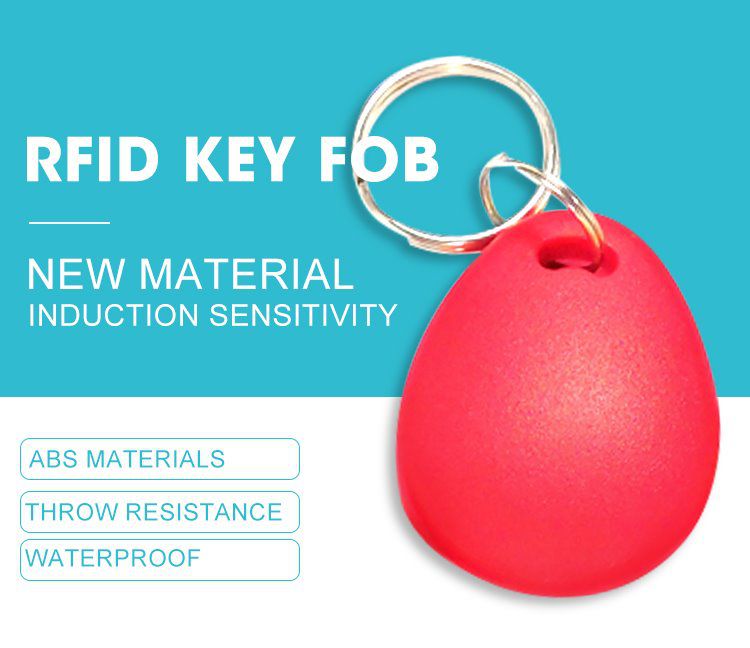
- Description: The most common and economical type. Made from Acrylonitrile Butadiene Styrene, a durable and impact-resistant thermoplastic. Often tear-drop, rectangular, or round in shape.
- Features: Lightweight, available in many colors, can be customized with printing or laser engraving. Good general-purpose durability.
- Applications: Widely used in all types of access control, time attendance.
-
Epoxy Resin Key Fobs:
- Description: Made by encasing the RFID chip and antenna in a clear or colored epoxy resin. This process creates a smooth, glossy, and highly durable finish.
- Features: Extremely resistant to water, chemicals, scratches, and impact. Often have unique, artistic designs.
- Applications: Ideal for harsh environments, promotional items, or where a premium aesthetic is desired.
-
PU Leather (Faux Leather) Key Chains:
- Description: Encased in synthetic leather, offering a sophisticated and elegant appearance that mimics genuine leather.
- Features: Soft touch, durable, can be debossed or embossed with logos, and often comes with a sturdy metal keyring.
- Applications: Hotels, corporate offices, VIP access, luxury brands, and personal use where style is important.
-
Silicone Key Fobs/Wristbands:
- Description: Made from flexible and soft silicone material.
- Features: Fully waterproof, comfortable to wear (especially as wristbands), resistant to extreme temperatures, and durable.
- Applications: Gyms, swimming pools, water parks, outdoor events, hospitals.
-
Wooden Key Fobs:
- Description: Crafted from natural wood, offering an eco-friendly and distinct aesthetic.
- Features: Unique grain patterns, can be laser engraved for customization.
- Applications: Eco-conscious brands, unique promotional items, hotels aiming for a natural theme.
-
Metal Key Fobs:
- Description: Features a metal casing, sometimes combined with other materials.
- Features: Extremely robust, heavy-duty, premium feel.
- Applications: Industrial settings, high-security areas, or for a strong, long-lasting credential.
The selection of an RFID key fob type depends entirely on the specific application’s requirements, including desired read range, security needs, environmental conditions, budget, and aesthetic preferences.
| Product Parameters | |
| Product name | RFID Key Fob Types |
| Size | 37*30*8 mm |
| Chip | F08 |
| Frequency | 13.56Mhz |
| Protocol | ISO14443A |
| Working life | 100,000 times |
| Working temperature | -20℃~70℃ |
Package:
100pcs/bag
2500pcs/ctn
Carton size:40*20*36cm
GW:13KG